Business Toolbox: What You Need to Know About Accessory Dwelling Units (ADUs) and Financing

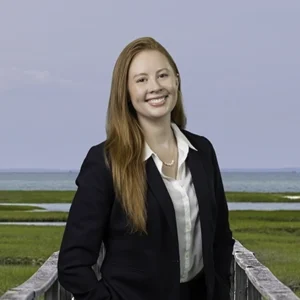
Charlotte Green headshotAccessory Dwelling Units, or ADUs, are becoming a popular housing solution across the Cape, where the housing market is tight and rental demand is high.

ADUs can take many forms. There is a lot of interest and momentum in standalone structures, but  traditionally they have taken the form of a converted garage or basement apartment. They are fully functional homes with their own kitchens, bathrooms, living areas, and often modest yard space and parking.

ADUs also can be a practical choice for homeowners seeking to maximize their property’s value. An ADU can provide homeowners with a revenue stream; however, there are upfront costs to convert or build the space. Cape & Coast Bank offers financing solutions to help homeowners realize an ADU investment. The right approach depends on your financial situation, project specifics, and long-term goals.

A Home Equity Line of Credit (HELOC) is one of the most popular ways to finance an ADU. It allows homeowners to borrow against the equity in their existing property, offering a flexible and cost effective way to access funds as needed for construction. HELOCs offer flexibility, allowing you to borrow only what you need, when you need it. During what is called the draw period, you may only be required to pay interest on the amount borrowed, holding down initial costs. In addition, HELOCs often have lower interest rates compared to personal loans.

For those who prefer a fixed loan with predictable monthly payments, a home equity loan could be the right choice. With this approach a homeowner receives a lump sum based on their home’s equity, which is then repaid over time at a fixed interest rate. This method is ideal for homeowners who have a clear budget for their ADU  project and prefer the certainty of fixed payments.

Another alternative to consider is a construction loan. Cape & Coast Bank offers construction loans tailored to provide short-term financing, covering costs during the building process of your ADU. Once the project is complete, the loan converts to a traditional mortgage or be refinanced into another type of financing, such as a HELOC.

With several financing pathways available, Cape & Coast Bank provides personalized service to help homeowners make informed decisions. Our loan officers are well versed in all aspects of ADU financing and can recommend solutions to fit your unique needs.

Contact Cape & Coast Bank today to explore your options and take the first step toward building an ADU. Whether you’re in the planning phase or ready to break ground, our team is here to help homeowners unlock the potential of their property and contribute to addressing housing needs in our region.

Charlotte Green is First Vice President, Residential Mortgage Sales Manager, NMLS# 994452, at Cape & Coast Bank.

MEMBER FDIC | MEMBER DIF | EQUAL HOUSING LENDER NMLS# 520663.

2024 Holiday Giving

volunteers shopped for Dress a Live Doll

Employees volunteered to shop for children via The Salvation Army’s Dress a Live Doll program.

Paying It Forward

In 2024, we raised about $26,000 through our employee-managed #PayingItForward Program to help 26 nonprofit organizations. For the past 14 years, our employees have supported local nonprofit organizations in our community by wearing jeans at work.

Every other Friday, employees donate a minimum of $5, and an organization is designated as the beneficiary. The organizations are nominated by employees and selected by the employee-based Pay It Forward committee. The only criteria for nominations is that the organization be affiliated with Cape Cod and a registered 501(c)3.

This holiday season, our employees worked in teams to use #PayItForward funds for the following holiday community programs:


employees helped put together and deliver holiday meals in MashpeeHoliday Meal Deliveries

The Mashpee Chamber of Commerce is proud to organize and deliver holiday dinners to home-bound and in-need Mashpee residents. This year, our sponsorship helped with the cost of the meals. Our team also joined in to help make the deliveries!


Meals On Wheels

For the past 11 years, the Bank has provided holiday cards to be distributed with the Meals on Wheels deliveries for seniors served by the Barnstable Senior Center. We also have employees who volunteer to deliver meals on a weekly basis throughout the year.


#GivingTuesday

Our decade-long tradition of supporting local food pantries on Giving Tuesday expanded this year to include food distribution organizations in all 15 towns in Barnstable County.

Food pantries receiving $1,000 donations include:

Two pantries received an adjusted $500 Giving Tuesday donation. Both Friends Food Pantry in Bourne and Falmouth Service Center in Falmouth applied for and received grants from The Coop Foundation to help defray the cost of purchasing frozen meats, fresh produce and dairy items for their clients.

The Coop has also donated $3,000 to Lower Cape Outreach Council for its food pantries in Brewster, Chatham, Eastham, Orleans and Wellfleet. The additional $2,000 is a directed gift from two retiring trustees of The Coop Foundation.

Organizations providing food support to larger regions of the Cape are also part of the Giving Tuesday donations, including  the AIDS Support Group of Cape Cod food pantries in Hyannis and Provincetown, Family Table Collaborative, Sustainable CAPE, and Cape Kid Meals.

Cape & Coast Bank Supports Local Food Pantries in all 15 Barnstable County Towns on Giving Tuesday

Cape & Coast Bank will provide $15,000 in financial support to food pantries throughout the region on Giving Tuesday 2024.

The bank’s decade-long tradition of supporting local food pantries on Giving Tuesday, which began in 2014 as a “restock the shelves campaign,” has been expanded this year to include food distribution organizations in all 15 towns in Barnstable County.

Food pantries receiving $1,000 donations include:

Two pantries received an adjusted $500 Giving Tuesday donation. Both Friends Food Pantry in Bourne and Falmouth Service Center in Falmouth applied for and received grants from The Coop Foundation to help defray the cost of purchasing frozen meats, fresh produce and dairy items for their clients.

The Coop has also donated $3,000 to Lower Cape Outreach Council for its food pantries in Brewster, Chatham, Eastham, Orleans and Wellfleet. The additional $2,000 is a directed gift from two retiring trustees of The Coop Foundation.

“There are too many of our friends and neighbors suffering from food insecurity on Cape Cod, which is only exacerbated by inflation and the continuing affordable housing crisis,” said Lisa Oliver, Chair, President and CEO of Cape & Coast Bank. “The Coop applauds the dedication and hard work of our local food pantries and their volunteers to ensure Cape Cod families have food on the table. Please join us and generously support our local food pantries during the holiday season and throughout the year.”

Organizations providing food support to larger regions of the Cape are also part of the Giving Tuesday donations, including  the AIDS Support Group of Cape Cod food pantries in Hyannis and Provincetown, Family Table Collaborative, Sustainable CAPE, and Cape Kid Meals.

Business Toolbox: How a HELOC from Cape & Coast Bank Can Help You in the New Year

Custom Master Bathroom Design Drawing with Cross Section of Finished Photo.

Custom Master Bahroom Design Drawing with Cross Section of Finished Photo.

As the year comes to a close, many homeowners look for ways to prepare for upcoming expenses or tackle desired home improvements. A Home Equity Line of Credit (HELOC) from Cape & Coast Bank can allow homeowners to address these needs with flexibility and affordability.

A HELOC allows homeowners to borrow against the equity in their home, making it a low-cost financing option. Unlike traditional loans that provide a lump sum at closing, a HELOC functions more like a credit card: homeowners have access to a credit line from which they can draw funds as needed. As the balance is repaid, those funds become available again for use. This feature allows expenses and payments to be managed according to a needs-based schedule.

HELOCs from Cape & Coast Bank come with several benefits. During the draw period, homeowners can make interest-only payments, freeing up monthly cash flow for other priorities. The bank provides both variable and fixed-rate HELOC options, allowing borrowers to select the structure that best fits their goals. Competitive rates typically make HELOCs more affordable than other credit options, such as personal loans. For eligible uses, such as home improvements, interest on a HELOC is, in some cases, tax-deductible (consulting a tax advisor is recommended to confirm eligibility).

Additionally, Cape & Coast Bank offers a fixed-rate Home Equity Loan (HELoan) for those seeking predictable monthly payments. With a discount available for automatic payments from a Coop bank account, this option is ideal for homeowners with larger, one-time expenses like major renovations. Those looking to invest in income-generating Accessory Dwelling Units (ADUs) also have support through the bank’s flexible qualification options, allowing projected rental income to count toward the HELOC qualification. The bank offers loan amounts up to $450,000 for the ADU loan, and has no limit on traditional HELOCs, suitable for a range of projects from home improvements to converting unused spaces into a rental unit.

All loan decisions for Cape & Coast Bank’s HELOC program are made locally in Hyannis, allowing for faster approvals, trusted service, and an understanding of our local market. Homeowners can apply online or consult with a bank representative to discuss their specific goals and determine the best loan structure for a HELOC. Whether planning a home improvement project, consolidating debt, or covering seasonal expenses, a HELOC from Cape & Coast Bank is designed to provide flexible support for financial needs.

For more details or to start a HELOC application, visit Cape & Coast Bank’s website.

Charlotte Green is the FVP, Residential Mortgage Sales Manager at Cape & Coast Bank. She can be reached at 508.568.3308 or cgreen@mycapecodbank.com. NMLS ID #994452

Member FDIC • Member DIF • Equal Housing Lender
Bank NMLS ID #520663

American Banker names Lisa Oliver as one of The Most Powerful Women to Watch for Second Consecutive Year

American Banker names Lisa Oliver as one of The Most Powerful Women to Watch for Second Consecutive Year Lisa Oliver, Chair, President and CEO of Cape & Coast Bank, has been named one of 2024’s The Most Powerful Women to Watch honorees by American Banker magazine. She was also named to the prestigious financial industry list in 2023.

Now in its 22nd year, American Banker’s The Most Powerful Women in Banking™ initiative recognizes individuals and teams for demonstrating exceptional leadership skills, strong business performance and a commitment to driving real outcomes for diversity, equity and inclusion in financial services.

“Keep your eyes on these women in the years ahead,” said Chana Schoenberger, Editor-in-Chief of American Banker. “They exemplify modern leadership, with significant contributions to both their businesses and the industry at large. It hasn’t been an easy year for banks and financial institutions, but progress continues — not by chance, but through the determined efforts of these women.”

In addition to leading The Coop to increases in net income, return on average assets and overall growth in total assets during a year when the global economic climate was less than robust, Oliver led a successful strategy to invest in digital tools and services to create a more client-supportive environment. She recruited a digital officer for the bank and enhanced and expanded banking and digital deposit account services across multiple channels. Oliver also focused on increasing cash management solutions and opportunities for business clients, expanding the bank’s fraud protection awareness efforts and elevating the organization’s enterprise risk management processes.

“I remain truly humbled and honored to be included among this extraordinary group of women who are making a profound impact on the nation’s banking industry,” said Oliver. “I must thank the entire team from the Coop for their support and tenacity in delivering exceptional banking products and superior customer service. I am also exceptionally proud of the Coop’s philanthropic efforts to help alleviate critical issues affecting our region and achieving our vision of transforming lives through the power of community banking.”

The honorees will be recognized at THE MOST POWERFUL WOMEN IN BANKING Gala on Oct. 24 at The Glasshouse in New York City.

Cape & Coast Bank Appoints Kenneth Tingle to Business Intelligence Manager

Kenny TingleCape & Coast Bank has announced the appointment of Kenneth Tingle to the newly created role of First Vice President, Business Intelligence Manager.

Under Kenny’s leadership of the Business Intelligence function, Cape & Coast Bank will further enhance and define the team process of data analytics to support collaboration across all bank departments.

Kenny, an accomplished financial services professional, joins the bank from Cambridge Trust, recently acquired by Eastern Bank, where he served as Data Analytics Manager before assuming duties as Vice President of Sales and Data Analytics. He also served as a Private Banking Manager with Cambridge Trust and as a Bank Manager with Belmont Savings Bank.

“We welcome Kenny and look forward to leveraging his notable business intelligence expertise to ultimately benefit our clients,” said Lisa Oliver, Chair, President and CEO of Cape & Coast Bank. “An enhanced ability to transform raw data into actionable insights will help us identify trends, anticipate customer needs and respond to market conditions – helping us fulfill our mission to be the best bank on Cape Cod.”

A graduate of Franklin Pierce University with a bachelor’s degree in finance, Kenny’s coursework includes cost accounting and finance as well as corporate marketing. He is also a former member of the New Hampshire Banker’s Legislative Committee.

“The Coop is an institution that is built on serving the community, and I look forward to joining a management team that is dedicated to continually enhancing its products and services,” said Kenny. “In my role managing business intelligence, I will work to drive the mission forward by promoting actionable solutions that have direct benefit to customers.”

What are 529 College Savings Plans?

Young male graduate student against university background, AI generated

Young male hispanic graduate student wearing academic hat and gown against of university background and graduates students. Generative AI

529 savings plans are tax-advantaged education savings vehicles and one of the most popular ways to save for college today. They can also be used to save for K-12 tuition. Much like the way 401(k) plans changed the world of retirement savings a few decades ago, 529 savings plans have changed the world of education savings.

529 plans were created by Congress in 1996 and have been modified through the years by various pieces of legislation. Known officially as “qualified tuition programs” or QTPs, 529 plans are so named because they are governed by section 529 of the Internal Revenue Code.

Tax advantages and more

529 savings plans offer a unique combination of features that no other education savings vehicle can match:

  • Federal tax advantages: Contributions to a 529 account accumulate tax deferred and earnings are tax free if the money is used to pay the beneficiary’s qualified education expenses. (The earnings portion of any withdrawal not used for qualified education expenses is taxed at the recipient’s rate and subject to a 10% penalty.)
  • State tax advantages: States are free to offer their own tax benefits to state residents, such as a tax deduction for contributions.
  • High contribution limits: Most plans have lifetime limits of $350,000 and up (limits vary by state).
  • Unlimited participation: Anyone can open a 529 savings plan account, regardless of income level.
  • Wide use of funds: Money in a 529 savings plan can be used to pay the full cost (tuition, fees, housing, food, books, supplies) at any accredited college or graduate school in the United States or abroad; for certified apprenticeship programs (fees, books, supplies, equipment); for student loan repayment (there is a $10,000 lifetime limit per 529 plan beneficiary and $10,000 per each of the beneficiary’s siblings); and for K-12 tuition expenses up to $10,000 per year.
  • Professional money management: 529 savings plans are offered by states, but they are managed by designated financial companies who are responsible for managing the plan’s underlying investment portfolios.
  • Flexibility: Under federal rules, you are entitled to change the beneficiary of your account to a qualified family member at any time as well as roll over (transfer) the money in your account to a different 529 plan once per calendar year without income tax or penalty implications.
  • Accelerated gifting: 529 savings plans offer an estate planning advantage in the form of accelerated gifting. This can be a favorable way for grandparents to contribute to their grandchildren’s education while paring down their own estate, or a way for parents to contribute a large lump sum. Under special rules unique to 529 plans, a lump-sum gift of up to five times the annual gift tax exclusion amount ($18,000 in 2024) is allowed in a single year, which means that individuals can make a lump-sum gift of up to $90,000 and married couples can gift up to $180,000. No gift tax will be owed, provided the gift is treated as having been made in equal installments over a five-year period and no other gifts are made to that beneficiary during the five years.
  • Transfer to ABLE account: 529 account owners can roll over (transfer) funds from a 529 account to an ABLE account without federal tax consequences. An ABLE account is a tax-advantaged account that can be used to save for disability-related expenses for individuals who become blind or disabled before age 26.

Choosing a 529 savings plan

Although 529 savings plans are governed by federal law, their implementation is left to the states. Currently, there are over 50 different savings plans available because many states offer more than one plan.

You can join any state’s 529 savings plan, but this variety may create confusion when it comes time to select a plan. Each plan has its own rules and restrictions, which can change at any time. To make the process easier, it helps to consider a few key features:

  • Your state’s tax benefits: A majority of states offer some type of income tax break for 529 savings plan participants, such as a deduction for contributions or tax-free earnings on qualified withdrawals. However, some states limit their tax deduction to contributions made to the in-state 529 plan only. So make sure to understand your state’s rules.
  • Investment options: 529 savings plans vary in the investment options they offer. Ideally, you’ll want to find a plan with a wide variety of investment options that range from conservative to more growth-oriented to match your risk tolerance. To take the guesswork out of picking investments appropriate for your child’s age, most plans offer aged-based portfolios that automatically adjust to more conservative holdings as your child approaches college age. (Remember, though, that any investment involves risk, and past performance is no guarantee of how an investment will perform in the future. The investments you choose may lose money or not perform well enough to cover college costs as anticipated.)
  • Fees and expenses: Fees and expenses can vary widely among plans, and high fees can take a bigger bite out of your savings. Typical fees include annual maintenance fees, administration and management fees (usually called the “expense ratio”), and underlying fund expenses.
  • Reputation of financial institution: Make sure that the financial institution managing the plan is reputable and that you can reach customer service with any questions.
  • User experience: Is the plan’s website easy to use? Can you easily take care of routine tasks online, such as set up automatic monthly contributions, change your contribution amount, research plan investments, find your rate of return, or request a withdrawal?

With so many plans available, it may be helpful to consult an experienced financial professional who can help you select a plan and pick your plan investments. In fact, some 529 savings plans are advisor-sold only, meaning you must go through a designated financial advisor to open an account.

Account mechanics

Once you’ve selected a plan, opening an account is easy. You’ll need to fill out an application, where you’ll name a beneficiary and select one or more of the plan’s investment portfolios to which your contributions will be allocated. Also, you’ll typically be required to make an initial minimum contribution, which must be made in cash or a cash alternative.

Thereafter, most plans will allow you to contribute as often as you like. This gives you the flexibility to tailor the frequency of your contributions to your own needs and budget, as well as to systematically invest your contributions by setting up automatic monthly transfers from your bank account.

As for investment changes, beware that under federal law you are allowed to exchange your existing plan investments for new investments only twice per year. In other words, if your existing plan funds are currently invested in plan portfolios A & B but you want to change them to plan portfolios C & D, you can do this only twice per calendar year. However, you generally have unlimited say in how your future contributions will be invested.

You will also be able to change the beneficiary of your 529 savings account to a qualified family member with no income tax or penalty implications.

529 prepaid tuition plans — a distant cousin

There are actually two types of 529 plans — savings plans and prepaid tuition plans. The tax advantages of each are the same, but the account features are very different. A prepaid tuition plan lets you prepay tuition at participating colleges, typically in-state public colleges, at today’s prices for use by the beneficiary in the future. 529 prepaid tuition plans are generally limited to state residents, whereas 529 savings plans are open to residents of any state. Prepaid tuition plans are much less common than savings plans.

Note: Investors should consider the investment objectives, risks, charges, and expenses associated with 529 plans before investing; specific plan information is available in each issuer’s official statement. There is the risk that investments may not perform well enough to cover college costs as anticipated. Also, before investing, consider whether your state offers any favorable state tax benefits for 529 plan participation, and whether these benefits are contingent on joining the in-state 529 plan. Other state benefits may include financial aid, scholarship funds, and protection from creditors.

Contact us to get started

This content has been reviewed by FINRA.

Prepared by Broadridge Advisor Solutions. © 2024 Broadridge Financial Services, Inc.

Investment and insurance products and services are offered through OSAIC INSTITUTIONS, INC., Member FINRA/SIPC. Osaic Institutions and the bank/credit union are not affiliated. Products and services made available through Osaic Institutions are not insured by the FDIC/NCUA or any other agency of the United States and are not deposits or obligations of nor guaranteed or insured by any bank, bank affiliate, credit union, or credit union affiliate. These products are subject to investment risk, including the possible loss of value.

 NOT FDIC/NCUA-INSURED. NOT INSURED BY ANY FEDERAL GOVERNMENT AGENCY. NOT GUARANTEED BY THE BANK/CREDIT UNION. MAY GO DOWN IN VALUE.

Business Toolbox: Fraud, Scams and Identity Theft – Awareness and Prevention

From old fashioned tricks such as check fraud to techniques employed by sophisticated computer hackers, financial scams are on the rise. Being forewarned is to be forearmed with information that can help you steer clear of some of the more popular scams designed to steal your money, or your identity.

Here are some of the more prevalent scams you’re likely to encounter, followed by a series of tips on how to protect yourself from falling prey.

Tech Support Scams: Fraudsters pose as representatives from reputable tech companies, claiming a victim’s personal computer or phone has been compromised. Victims are then persuaded to transfer funds to supposedly “secure” accounts. Most often senior citizens fall prey to tech support scams.

Phishing Scams: Emails or texts are used to trick victims into providing personal information, perhaps to remedy a supposed account problem with a subscription, credit card, or other account. These messages often appear to come from trusted companies and organizations.

Political Season Scams: The 2024 election year cycle is in full swing with text message solicitations for candidate contributions. Beware of legitimate looking messages which ask for a credit card number, and in some cases your bank account and routing number. If you intend to make a contribution to a candidate, or any organization, visit their website through a secure server.

Government Imposter Scams: Scammers pose as government officials, often from the IRS, claiming the victim owes money or has an unclaimed refund. Confirm any such claims by reaching out directly to the IRS.

Weather Emergency Scams: Weather scams can strike either before or after a storm. In some cases fake insurers offer an extended coverage policy for potential damage, or if your region does sustain damage, imposter contractors solicit money up front for promised repairs that never take place.

Service Shut-Off Scams: Imposters play the role of a cable service, wireless carrier, electric company or gas utility representative and threaten service will be shut off unless funds are forthcoming.

Check-Cashing Scams: A scammer asks someone to cash a check for them, which later bounces, leaving the victim liable.

Overpayment Scams:  Small businesses often fall prey to this trick. Counterfeit checks for more than the owed amount are received followed by a request for the difference to be wired back.

Unsolicited Check Fraud: Victims receive unexpected checks that, when cashed, bind them to unwanted services or memberships.

Automatic Withdrawal Scams: Scammers use fake offers to obtain bank information and set up unauthorized withdrawals. Another popular technique is employed by con artists who will offer assistance at a public ATM, only to exchange your bank card with a phony card using sleight of hand.

How to Protect Yourself:

  • Verify the legitimacy of texts, emails or phone calls by placing a call directly to the bank, organization or agency.
  • Be cautious of sharing personal information at all times.
  • Never cash checks for strangers.
  • Verify the authenticity of received checks.
  • Promptly report suspected scams to authorities and financial institutions.

While financial fraud and scams can be a costly inconvenience, identity theft can take months to remedy, potentially placing every aspect of your personal records in jeopardy. Your social security number should be protected at all times. Criminals gain access to your social security number by various methods such as dumpster diving, skimming, phishing, changing addresses, and stealing mail. Protect yourself by:

  • Shredding sensitive documents.
  • Never share personal information over unsolicited calls.
  • Black out your social security number on any copied documents where it is not essential information.
  • Reviewing financial statements promptly.
  • Checking credit reports annually for inaccuracies.
  • Using secure websites for online transactions. Secure websites begin with what is called a URL prefix ending in “s” – For example: https://www.Website. Make sure the “s” is present.
  • Request that the USPS place a hold on your delivered mail if away on vacation.

Overall, being aware of common scams and practicing caution can help protect personal and financial information from being compromised.

The security of personal and account information is extremely important to Cape & Coast Bank. As a true community bank, it is our responsibility to keep you, the customer, informed of current fraud trends and to educate you on how to best protect yourself. By taking a proactive approach, we can help ensure that your private information is protected.

For more information, please visit Cape & Coast Bank website.

Boston Business Journal Names Cape & Coast Bank Among the Most Charitable Companies in Massachusetts

The Boston Business Journal has named The Cooperative Bank of Cape Cod an honoree in its annual 2024 Corporate Citizenship Awards, a recognition of the region's top corporate charitable contributors.The Boston Business Journal has named Cape & Coast Bank an honoree in its annual 2024 Corporate Citizenship Awards, a recognition of the region’s top corporate charitable contributors.

The Business Journal annually publishes this list to showcase companies that promote and prioritize giving back to their communities.

“It is with honor that we present our list of the Top Charitable Contributors in Massachusetts – companies who gave $100,000 or more to Mass.-based in charities in 2023. Collectively, they gave more than $362 million in cash contributions – a true example of the business community coming together to help those in need.  We are proud to celebrate these organizations who give both money and time to make Boston a stronger and better place for all,” said Boston Business Journal Market President and Publisher Carolyn Jones.

This year 96 companies have qualified for the distinction by reporting at least $100,000 in cash contributions to Massachusetts-based charities last year as noted above. The honorees this year include companies from such industry sectors as financial and professional services, health care, technology, retail, and professional sports.

Cape & Coast Bank, whose contributions in many instances include both the corporation and its charitable foundation, will be honored at the BBJ’s 18th Annual Corporate Citizenship Awards on Thursday, September 5th at the Seaport Hotel. The evening will be filled with networking, making connections, and recognizing all the Charitable Contributors, the Alan B. Lewis | Alnoba CEO Social Leadership Award and our 2024 Corporate Citizenship Community Collaboration Awardees (previously our Partners of the Year).

“It is an honor to be recognized by The Boston Business Journal and included among other charitable contributors for 2024 Corporate Citizenship awards,” said Cape & Coast Bank, Chair, CEO and President Lisa Oliver. “The region’s housing crisis, compounded by inflationary pressures have many of our neighbors struggling financially. As a true community bank, Cape & Coast Bank is committed to supporting the many nonprofit organizations that are improving quality of life and providing hope for so many people on Cape Cod.”

Cape & Coast Bank Appoints Kathy Granlund as Small Business Relationship Manager

Kathy Granlund headshotCape & Coast Bank has announced the appointment of Kathy Granlund to the position of Vice President, Small Business Relationship Manager based at the bank’s East Harwich branch.

Kathy, a resident of Wellfleet and a former business owner, is an accomplished banking and finance professional with more than 20 years of experience with TD Bank, Santander and Rockland Trust.

“I’m thrilled to be working with Cape Cod’s true community bank,” said Kathy, “The Coop has an exceptional legacy of providing customized banking and financial solutions to meet the unique needs of our diverse communities, while supporting organizations dedicated to improving lives throughout Cape Cod.”

In her new role at Cape & Coast Bank, Kathy will help small business clients craft a financial plan that meets their goals including from payroll and merchant services, loans and digital banking. In addition, she will focus on cultivating and expanding the bank’s small business market throughout the region.

“Kathy’s extensive banking and finance experience and knowledge of the Cape Cod market are an ideal fit for Cape & Coast Bank,” said Lisa Oliver, Chair, President and CEO, Cape & Coast Bank. “She understands the importance of a community bank and its role in supporting small businesses and providing philanthropic support to the communities we serve. Kathy will be a tremendous asset to our team and to our clients.”

Kathy holds a bachelor’s degree in accounting from Assumption College and is actively engaged in a number of community related interests, including The Town of Wellfleet Finance Committee, The Yarmouth Chamber of Commerce Finance Committee and the Lower Cape Community Development Partnership.